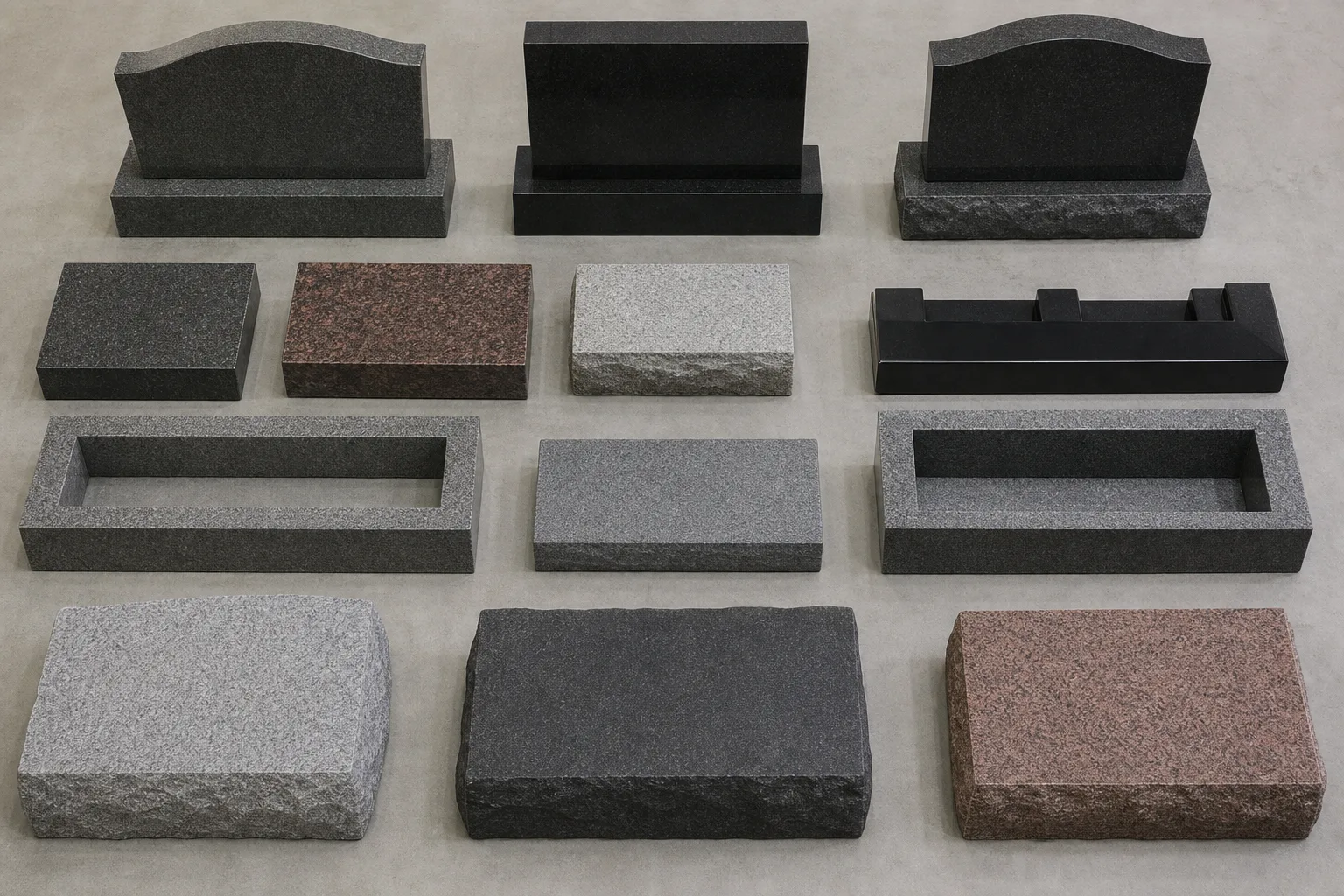
One monument order followed all the way through, from the cemetery office to the dealer to the crew that poured the foundation, with the figures and rules that came back at each step.
The order of operations matters more than most families expect. A monument dealer can quote almost anything, in almost any granite, at almost any height, and the quote will look perfectly reasonable until the cemetery superintendent reads it and says no. Nearly every burial ground in the country writes rules governing what may stand over a grave, and those rules are organized by section, not by the cemetery as a whole. The plot you own already carries its restrictions. Finding out what they are is a phone call and an email, made before anyone measures a base.
Ask for the regulations, not for advice
Call the cemetery office and ask for the current written rules and regulations for your specific section, block and lot, plus whatever permit or application form the mason will eventually file. Ask for it as a document, sent by email or picked up in person. What you want to avoid is a summary given over the phone by someone who is recalling the general practice, because general practice changes and sections differ. Older cemeteries often revised their rules in stages, so a stone standing three rows away may have been permitted under a policy retired twenty years ago.
What the section rules actually control
Read the document looking for six things: maximum height above grade, maximum width and depth of the base, permitted materials, permitted finishes, whether a foundation is poured by the cemetery or by the monument company, and whether upright markers are allowed in that section at all. Many cemeteries limit material to granite and bronze outright, having learned what marble and sandstone look like after fifty winters. Some restrict polished faces to the front and back only. Some cap the die at a set height and require the base to overhang by a fixed number of inches on every side.
Lawn sections and the uniformity rule
Sections sold as memorial lawn, garden or park generally permit only flush markers set level with the turf, so a mower can pass over them without stopping. The rule exists for maintenance cost, and cemeteries enforce it consistently because a single upright stone defeats the purpose. Flush sections usually specify exact sizes, commonly rectangles in a small set of dimensions, along with the thickness of the granite and the bronze plate's border. If a family wants an upright monument, the practical answer is not to appeal the rule but to check whether the cemetery has an upright section with plots still available.
Church-owned ground and diocesan approval
Cemeteries owned by a parish, diocese or congregation frequently add a second layer of approval on top of the physical specifications. A design, an inscription, a symbol or a photographic image may need review by a cemetery committee, a pastor or a diocesan office, and that review can take weeks. Some grounds restrict inscriptions to particular languages, forbid certain emblems, or require a religious symbol on the face. Ask specifically whether the proposed lettering has to be submitted as a drawing for sign-off, and whether that approval happens before or after the stone is cut.
Federal markers and what they do not cover
The Department of Veterans Affairs is responsible for furnishing headstones, markers and medallions for eligible veterans, and provides them at no charge in a fixed range of types: upright marble and granite, flat granite, marble and bronze, and niche markers. The catalog is small on purpose, and the shape you receive is determined by what the cemetery permits rather than by preference. In a private cemetery, the government supplies the marker but the family generally pays for shipping arrangements, the foundation and the setting. Confirm those setting charges with the cemetery in writing, because they vary widely and are quoted separately from anything the dealer bills.
Reading the rules before the deposit
Bring the regulations to the dealer and hand them over at the first meeting. A competent monument company will read them, size the design to fit, and file the permit application on your behalf; several will decline to take a deposit until the cemetery has approved the drawing. Ask the dealer to put the approved dimensions on the order, and keep a copy of the stamped permit. The cost of doing this in the wrong order is not a lecture from the superintendent. It is a finished granite die that cannot be installed.
Most families discover that the permitted choices come down to a handful of shapes, two or three finishes and one material. That is a narrower field than it first appears, and a considerably easier one to shop.